

Photo: Unknown author, CC BY-SA 3.0 via Wikimedia Commons Source
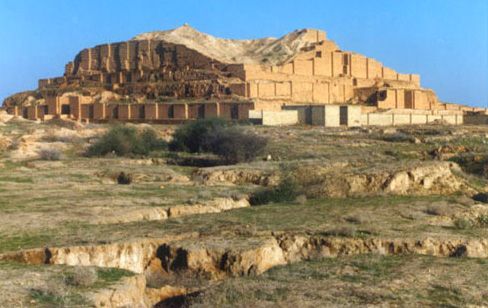
An Elamite ziggurat complex, one of the few surviving outside Mesopotamia. It is a UNESCO World Heritage Site.
- Country
- Iran
- Region
- Asia
- Period
- about 1250 BC
- Kind of site
- Ancient city, archaeological site
- Heritage status
- World Heritage Site; Iranian National Heritage
- Located in
- Khuzestan Province, Iran
- Also known as
- Choqa Zanbil; Dur Untash; Dur-Untash; Choqazanbil; Tchogha Zanbil
- Coordinates
- 32.0083° N, 48.5208° EWikipedia and Wikidata agree within 0.0 km
- UNESCO
- World Heritage site 113
- Reference
- Wikidata Q4523
- Encyclopedia
- Wikipedia article
About this place
Chogha Zanbil is an ancient Elamite complex in the Khuzestan province of Iran. It is one of the few existing ziggurats outside Mesopotamia. It lies approximately 30 km (19 mi) southeast of Susa and 80 km (50 mi) north of Ahvaz. The construction date of the city is unclear due to uncertainty in the chronology of the reign of Untash-Napirisha, but is clearly sometime in the 14th or 13th century BC. The conventionally assumed date is 1250 BC. The city is currently believed to have been destroyed by the Neo-Assyrian ruler Assurbanipal in about 645 BC, along with the Elamite capital of Susa, though some researchers place the end of occupation in the late 12th century BC. The ziggurat is considered to be the best preserved example of the stepped pyramidal monument by UNESCO.
Adapted from the Wikipedia article Chogha Zanbil (this version), lightly edited for style, under the CC BY-SA 4.0 license.
Nearby places
Open in the Atlas →- Haft Tepe 20 km (12 mi)
- Chogha Bonut 24 km (15 mi)
- Gundeshapur 31 km (19 mi)
- Band-e Kaisar 31 km (19 mi)
- Susa 32 km (20 mi)
- Iwan-e Karkheh 52 km (32 mi)














Recent comments