

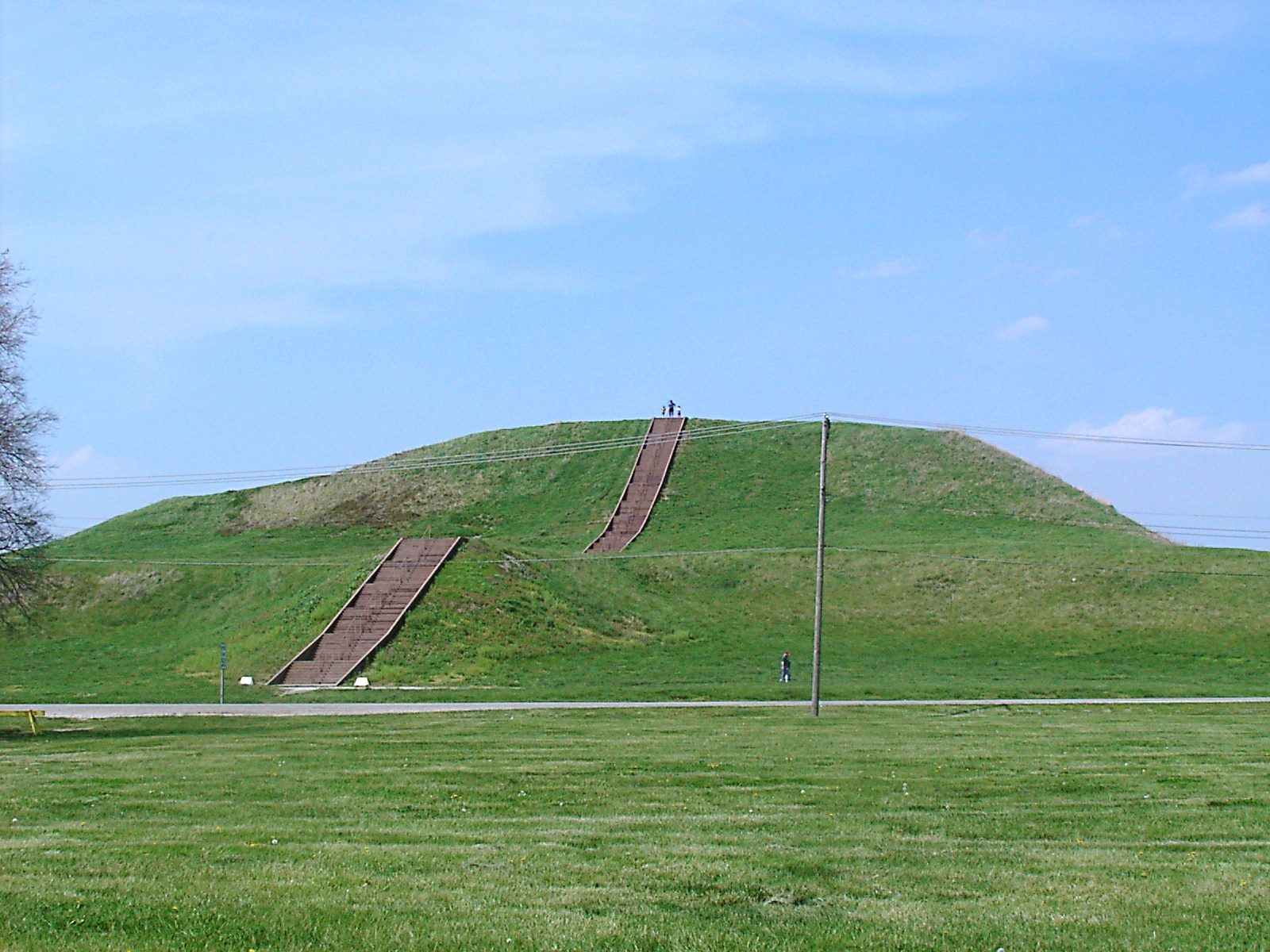
Photo: Skubasteve834, CC BY-SA 3.0 via Wikimedia Commons Source
The largest pre-Columbian city north of Mexico, with Monks Mound. It dates from 1050 and is associated with the Mississippian culture. It is a UNESCO World Heritage Site.
- Country
- United States
- Region
- Americas
- Period
- about AD 1050 to 1350
- Kind of site
- Illinois state park, ancient city, archaeological site
- Dates from
- 1050
- Period or culture
- Mississippian culture
- Heritage status
- National Historic Landmark; World Heritage Site; National Register of Historic Places listed place
- Located in
- Collinsville, United States
- Also known as
- Cahokia Mounds State Historic Site; Cahokia Mounds State Park
- Coordinates
- 38.6539° N, 90.0644° WWikipedia and Wikidata agree within 0.0 km
- Reference
- Wikidata Q333661
- Encyclopedia
- Wikipedia article
About this place
The Cahokia Mounds is the site of a Native American city which existed c. 1050, c. 1350 AD, directly across the Mississippi River from present-day St. Louis. The state archaeology park lies in south-western Illinois between East St. Louis and Collinsville. The park covers 2,200 acres (890 ha; 3.4 mi2; 8.9 km2), and contains about 80 manmade mounds, but the ancient city was much larger. At its apex around 1100 AD, the city covered about 6 square miles (16 km2), included about 120 earthworks in a wide range of sizes, shapes, and functions, and had a population of between 15,000 and 20,000 people. Cahokia was the largest and most influential urban settlement of the Mississippian culture, which developed advanced societies across much of what is now the Central and the Southeastern United States, beginning around 1000 AD.
Adapted from the Wikipedia article Cahokia (this version), lightly edited for style, under the CC BY-SA 4.0 license.
Nearby places
Open in the Atlas →- Mound 72 0.4 km (0.2 mi)
- Mound 34 1.0 km (0.6 mi)
- Sugarloaf Mound 17 km (11 mi)
- Lebanon Historic District 23 km (14 mi)
- Lunsford-Pulcher Archeological Site 23 km (14 mi)
- Alton Military Prison 29 km (18 mi)














Recent comments