

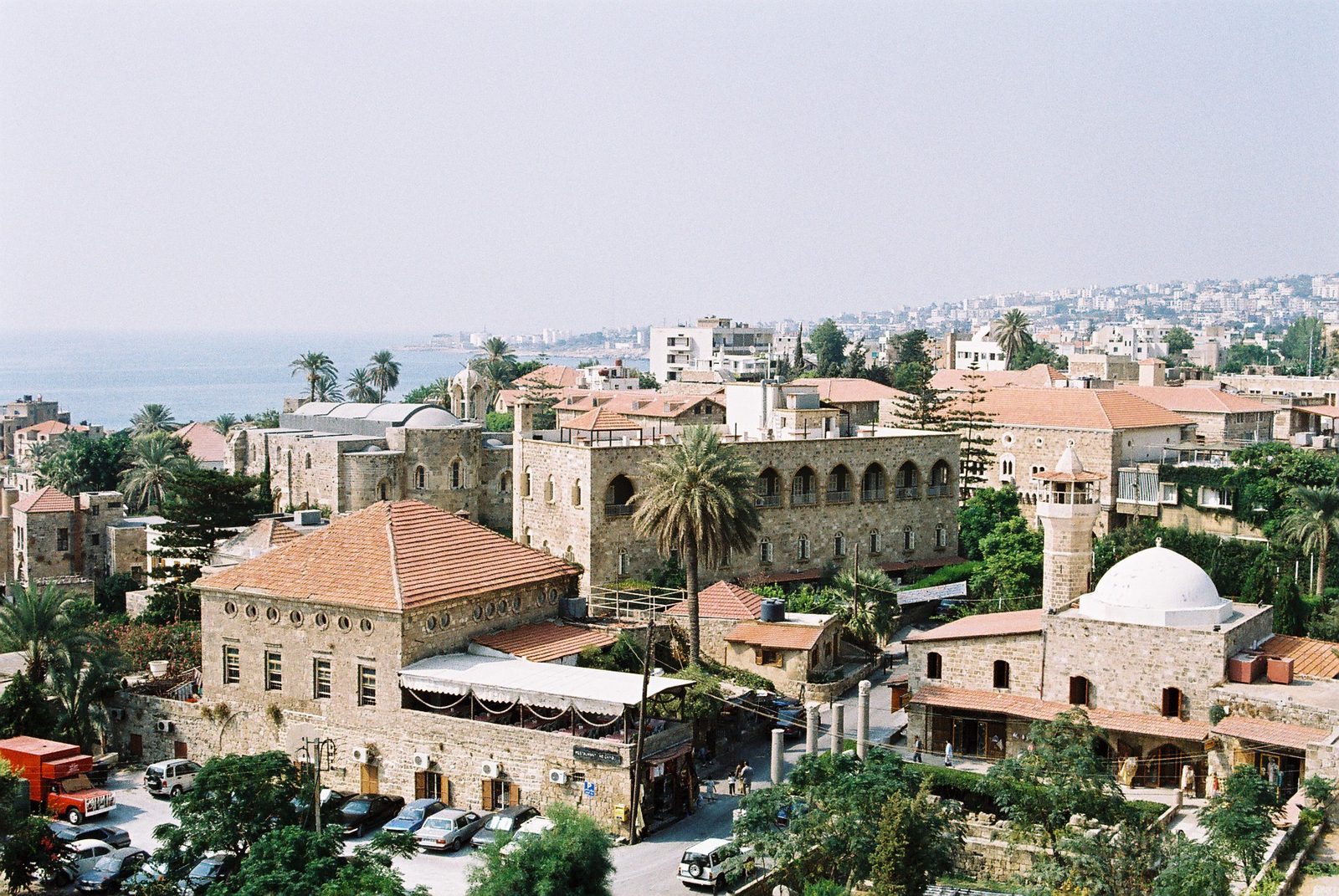
Photo: Orient at de.wikipedia, CC BY-SA 2.0 de via Wikimedia Commons Source
A Phoenician port city that gave its name to the Bible, and one of the oldest continuously inhabited towns. It dates from the 8th millennium BC and is associated with the Neolithic. It is a UNESCO World Heritage Site.
- Country
- Lebanon
- Region
- Asia
- Period
- from about 8800 BC
- Kind of site
- City, city-state, human settlement
- Dates from
- 8th millennium BC
- Period or culture
- Neolithic
- Heritage status
- World Heritage Site
- Located in
- Jbeil District, Lebanon
- Also known as
- Jubayl; Gubla; Gval; Geval; Byblus
- Coordinates
- 34.1236° N, 35.6519° EWikipedia and Wikidata agree within 0.79 km
- UNESCO
- World Heritage site 295
- Reference
- Wikidata Q173532
- Encyclopedia
- Wikipedia article
About this place
Byblos, also known as Jbail, Jebeil, Jbeil or Jubayl (Arabic: جُبَيْل, romanized: Jubayl, locally Jbeil [ʒbeːl]), is an ancient city in the Keserwan-Jbeil Governorate of Lebanon. The area is believed to have been first settled between 8800 and 7000 BC and continuously inhabited since 5000 BC. During its history, Byblos was part of numerous cultures including Canaanite, Egyptian, Phoenician, Assyrian, Persian, Hellenistic, Roman, Umayyad, Abbasid, Genoese, Ayyubid, Mamluk and Ottoman. Urbanisation is thought to have begun during the third millennium BC when it developed into a city, making it one of the oldest cities in the world, if not the oldest. It is a UNESCO World Heritage Site.
Adapted from the Wikipedia article Byblos (this version), lightly edited for style, under the CC BY-SA 4.0 license.
Nearby places
Open in the Atlas →- Temple of the Obelisks 0.7 km (0.4 mi)
- Kfaraabida 11 km (7 mi)
- Batruna 15 km (9 mi)
- Qalaat Faqra 20 km (12 mi)
- stelae of Nahr el-Kalb 20 km (12 mi)
- Roman temple of Bziza 23 km (14 mi)














Recent comments