

Photo: A.Savin, CC BY-SA 3.0 via Wikimedia Commons Source
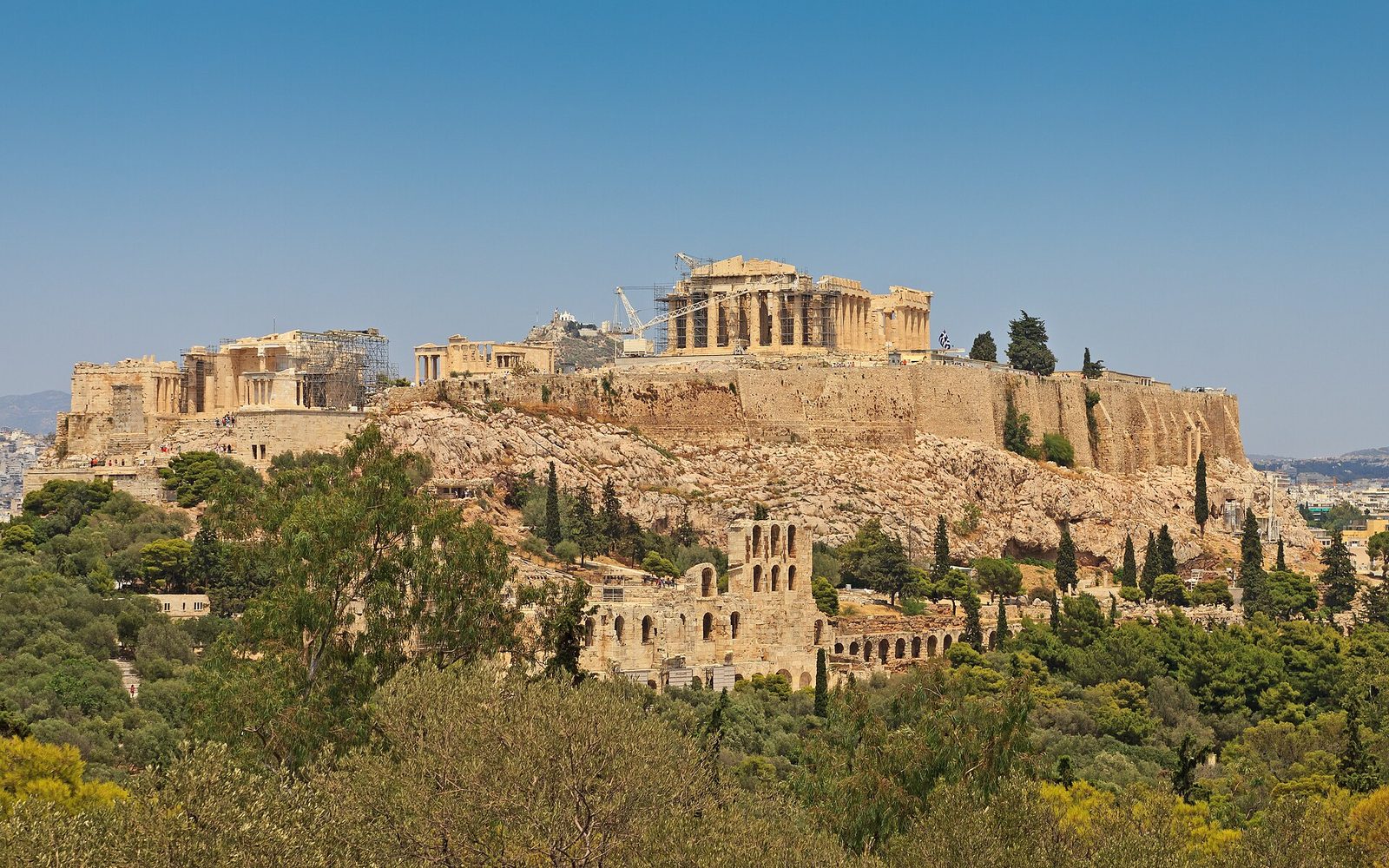
The rocky citadel of Athens with the Parthenon, the Erechtheion and the Propylaia. It dates from the 5th century BC and is associated with Ancient Greece. It is a UNESCO World Heritage Site.
- Country
- Greece
- Region
- Europe
- Period
- 5th century BC
- Kind of site
- Acropolis, Ancient Greek archaeological site
- Dates from
- 5th century BC
- Period or culture
- Ancient Greece
- Heritage status
- World Heritage Site; Archaeological site in Greece
- Located in
- Athens Municipality, Greece
- Also known as
- Acropolis (Athens)
- Coordinates
- 37.9717° N, 23.7261° EWikipedia and Wikidata agree within 0.0 km
- UNESCO
- World Heritage site 404
- Reference
- Wikidata Q131013
- Encyclopedia
- Wikipedia article
About this place
The Acropolis of Athens is an ancient citadel located on a rocky outcrop above the city of Athens, Greece, and contains the remains of several ancient buildings of great architectural and historical significance, the most famous being the Parthenon. The word Acropolis is from Greek ἄκρον (akron) 'highest point, extremity' and πόλις (polis) 'city'. The term acropolis is generic and there are many other acropoleis in Greece. During ancient times the Acropolis of Athens was also more properly known as Cecropia (Κεκροπία), after the legendary serpent-man Cecrops, the supposed first Athenian king. While there is evidence that the hill was inhabited as early as the 4th millennium BC, it was Pericles (c. 495 to 429 BC) in the fifth century BC who coordinated the construction of the buildings whose present remains are the site's most important ones, including the Parthenon, the Propylaea, the Erechtheion and the Temple of Athena Nike.
Adapted from the Wikipedia article Acropolis of Athens (this version), lightly edited for style, under the CC BY-SA 4.0 license.
Nearby places
Open in the Atlas →- Parthenon 0.0 km (0.0 mi)
- Vespasianae of Athens 0.3 km (0.2 mi)
- Agora nymphaion 0.3 km (0.2 mi)
- Library of Pantainus 0.3 km (0.2 mi)
- Gate of Athena Archegetis 0.3 km (0.2 mi)
- Street of the Tripods 0.3 km (0.2 mi)














Recent comments