

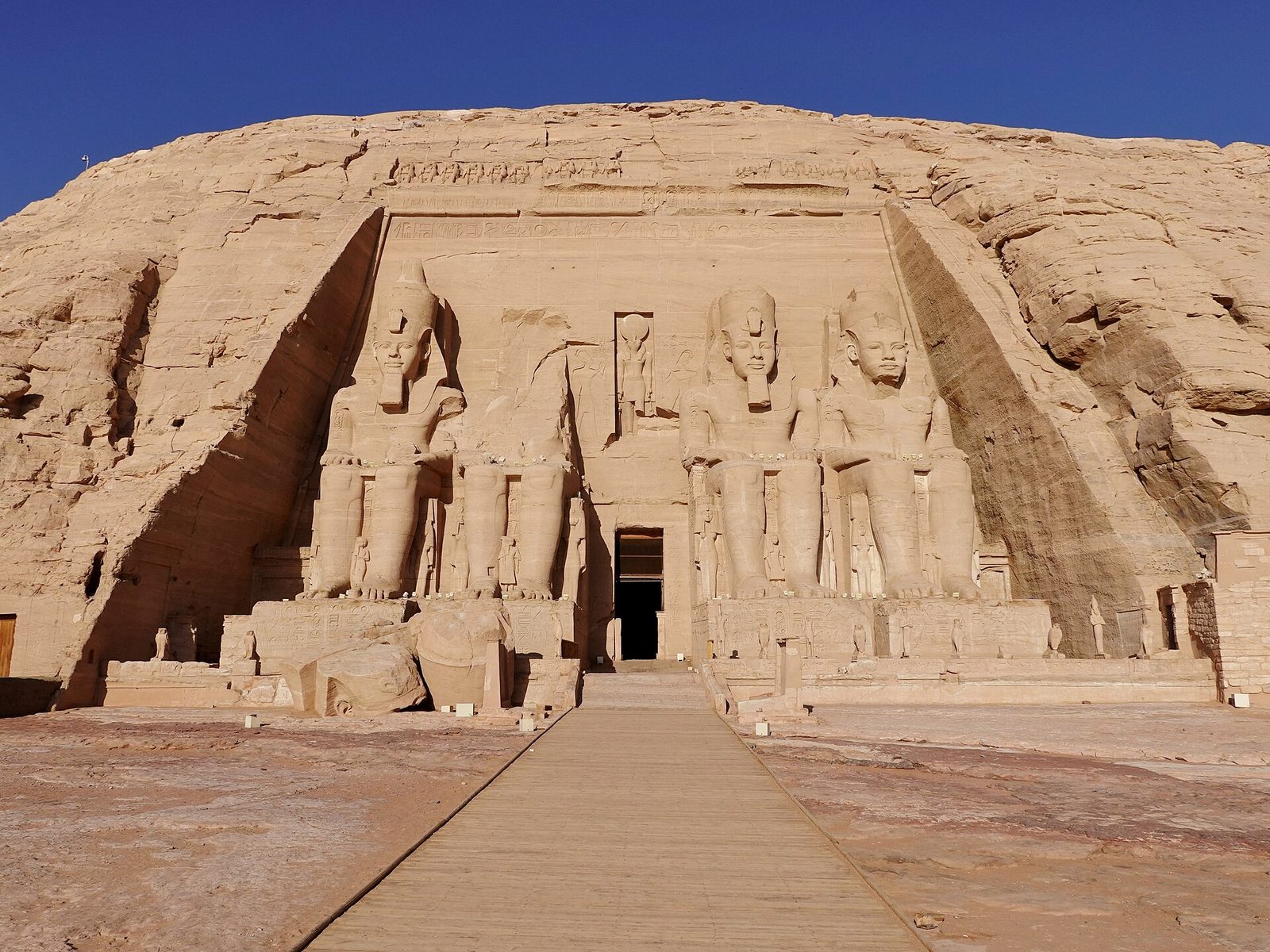
Photo: Olaf Tausch, Public domain via Wikimedia Commons Source
Abu Simbel is a pair of temples cut into a sandstone cliff by order of Ramesses II in southern Egypt, near the border with Sudan. They were carved in the 13th century BC to honor the king, the gods and his queen Nefertari. In the 1960s an international UNESCO campaign cut the temples into blocks and rebuilt them on higher ground to save them from Lake Nasser.
Two rock-cut temples of Ramesses II, moved in the 1960s to escape Lake Nasser. It dates from about 1264 BC and is associated with Ancient Egypt. It is part of a UNESCO World Heritage Site.
- Country
- Egypt
- Region
- Africa
- Period
- about 1264 BC
- Kind of site
- Temple complex, architectural ensemble, archaeological site
- Dates from
- about 1264 BC
- Period or culture
- Ancient Egypt
- Heritage status
- Part of UNESCO World Heritage Site
- Part of
- Nubian Monuments from Abu Simbel to Philae
- Located in
- Aswan Governorate, Egypt
- Also known as
- Great and Small Temples of Abu Simbel; Temples at Abu Simbel; Abu Simbel temples
- Coordinates
- 22.3369° N, 31.6256° EWikipedia and Wikidata agree within 0.0 km
- Reference
- Wikidata Q134140
- Encyclopedia
- Wikipedia article
About this place
Abu Simbel is a historic site comprising two massive rock-cut temples in the village of Abu Simbel, Aswan Governorate, Upper Egypt, near the border with Sudan. It is located on the western bank of Lake Nasser, about 230 km (140 mi) southwest of Aswan (about 300 km (190 mi) by road). The twin temples were originally carved out of the mountainside in the 13th century BC, during the 19th Dynasty reign of the Pharaoh Ramesses II. Their huge external rock relief figures of Ramesses II have become iconic. His wife, Nefertari, and children can be seen in smaller figures by his feet. Sculptures inside the Great Temple commemorate Ramesses II's heroic leadership at the Battle of Kadesh. The complex was relocated in its entirety in 1968 to higher ground to avoid it being submerged by Lake Nasser, the Aswan Dam reservoir.
Adapted from the Wikipedia article Abu Simbel (this version), lightly edited for style, under the CC BY-SA 4.0 license.














Recent comments