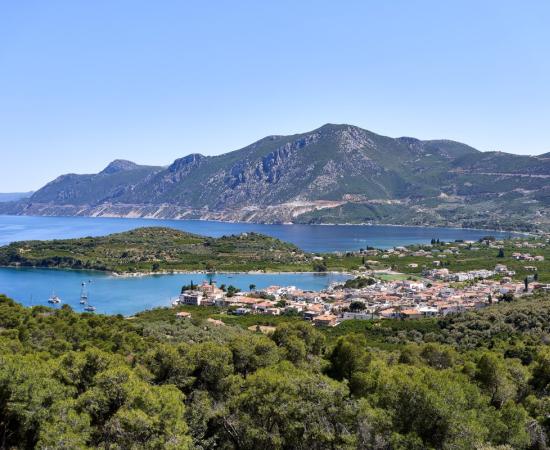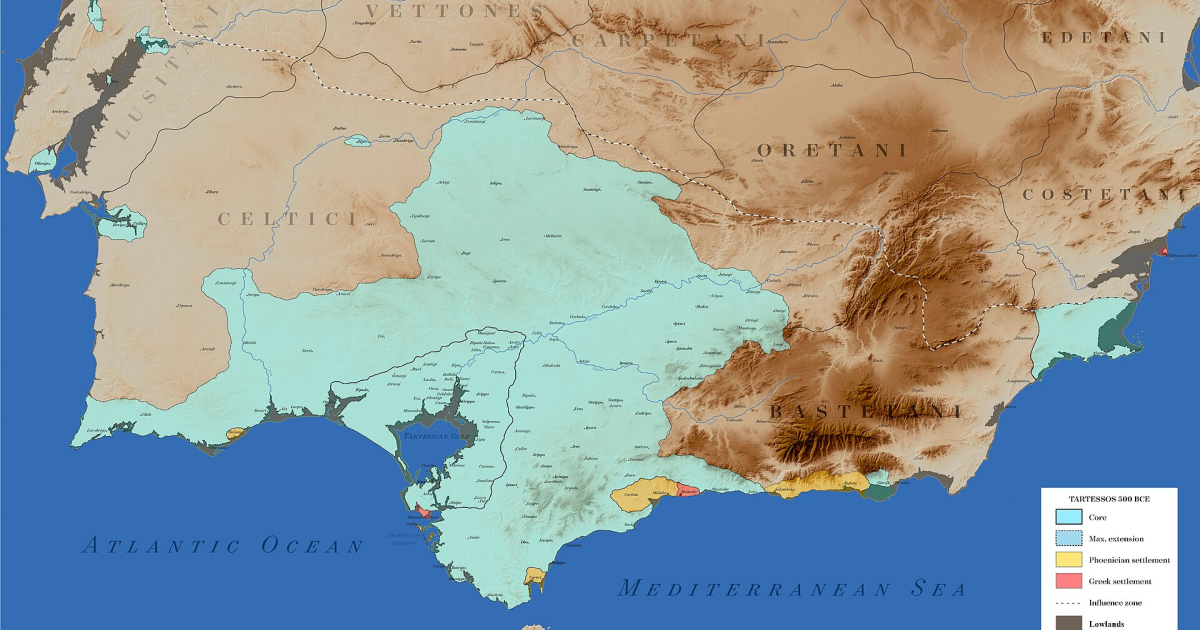

Tartessos was a land of myths and riches. The advanced culture of the people thrived on the southern Iberian Peninsula near the Guadalquivir River, an area now known as Andalusia, Spain. The story of Tartessos began between the 9th and 6th centuries BC. The Tartessians were craftsmen who specialized in using minerals. They were also sea-going traders, working with the Phoenicians and other Mediterranean societies to trade minerals, salt, and silver. Modern historians call Tartessos the “Atlantis of Spain,” because the civilization disappeared without explanation near the end of the 6th century. Its disappearance created myths maintaining that the sea swallowed it, the gods cursed it, or a mysterious plague decimated it. Others link Tartessos to the stories of El Dorado, a legendary land of great wealth.
Tartessos: An Enigma for Historians and Archaeologists
Though Tartessos influenced trade routes and gold exchange, there are few written records and scattered archaeological sites. Despite its importance, Tartessos remains an enigma for many historians and archaeologists due to the scarcity of written sources and the fragmentary nature of archaeological discoveries. The Greek historian, Herodotus, describes Tartessos as highly regarded by early Greek explorers for its trading network and generous hospitality. The Greeks believed that Tartessos was the first civilization of the West. The book of Ezekiel in the Bible describes Tartessians as clever traders in iron, silver, and lead far beyond their borders. Their king was named Arganthonios, and he was the subject of legends as well. His name means “silver one,” and he is said to have lived for 120 years. Herdotus also goes on to describe how Arganthonis gave silver to the Phocaenas to build a defensive wall around their city of Phocea in Asia Minor to protect it from incursions by the Medes.
- Lost Mass Animal Sacrifice Rituals Revealed at Tartessos Site in Spain
- Human Remains from the Tartessos Civilization Found at Site of Animal Slaughter
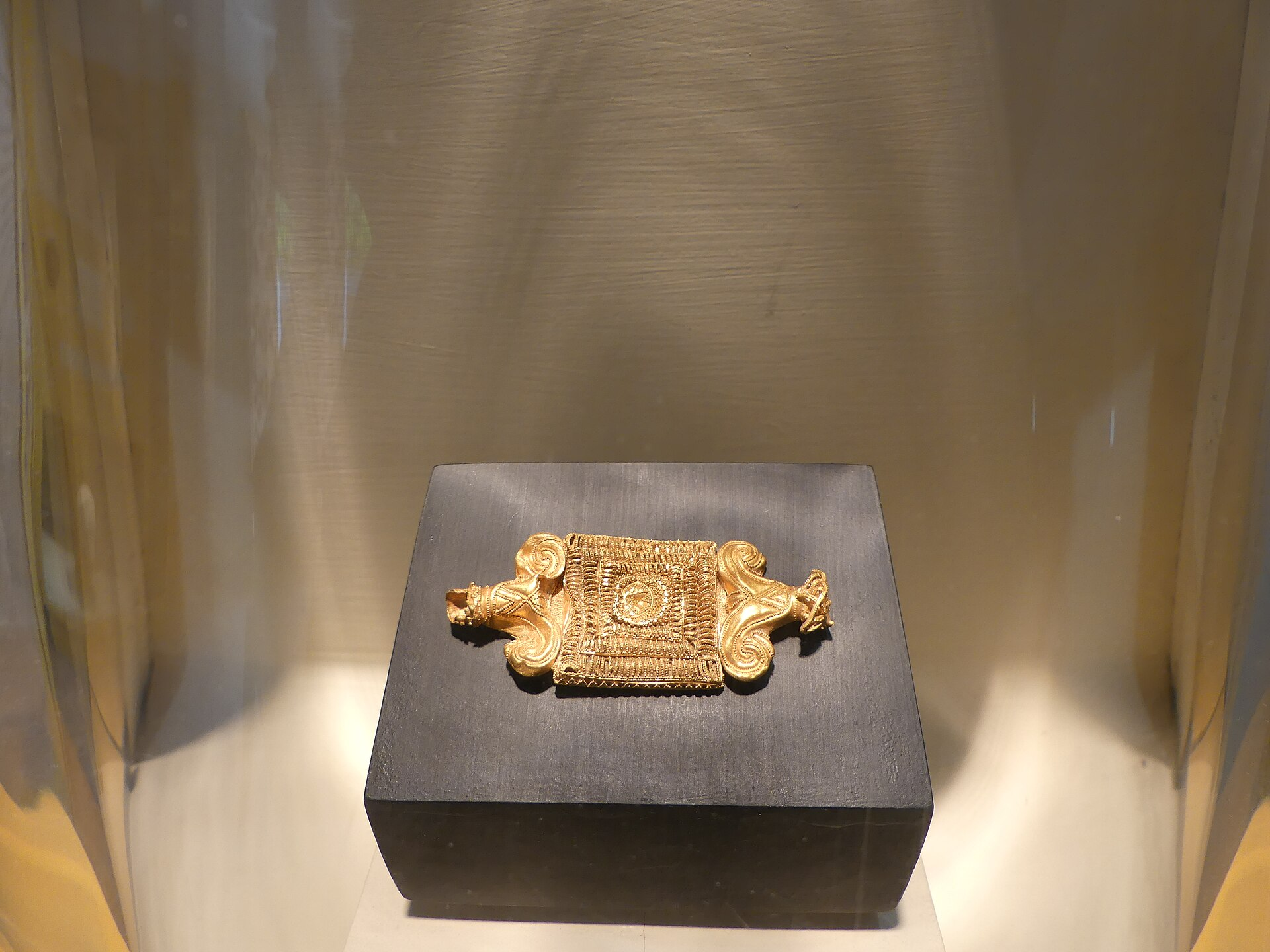
Tartessian Gold Ornament. (CarlosVdeHabsburgo/CC BY-SA 4.0 )
In 1958, archaeologists discovered a treasure near Seville that is associated with Tartessos - the El Carambolo Treasure. The treasure contained jewelry and gold objects created with skilled craftsmanship. The jewelry pieces have varied artistic styles that combine Eastern influence with indigenous traditions. Researchers also found examples of Tartessian writing. The letters look much like Phoenician script. Known as Southwest script, it is one of the oldest written forms on the Peninsula. The most common writings are those on funerary stelae and ceremonial objects.
Key Questions About the Tartessian Civilization
The two key questions for archaeologists exploring excavations in the Tartessos site are the following:
What were the daily lives of Tartessians like?
The people had a well-developed writing system and language. They were skilled craftsmen, traders, and sailors. They owned livestock and had abundant crops. They worshipped the gods of nature, and they may have built temples near rivers. Their stone monuments show that they used afterlife ceremonies. Tartessian art featured horse figures. Recent excavations found bronze cauldrons and gold plaques.
- Advanced 2500-Year-Old Construction Techniques Revealed
- 2,500-year-old city buried under flood sediment may belong to lost civilization in Spain
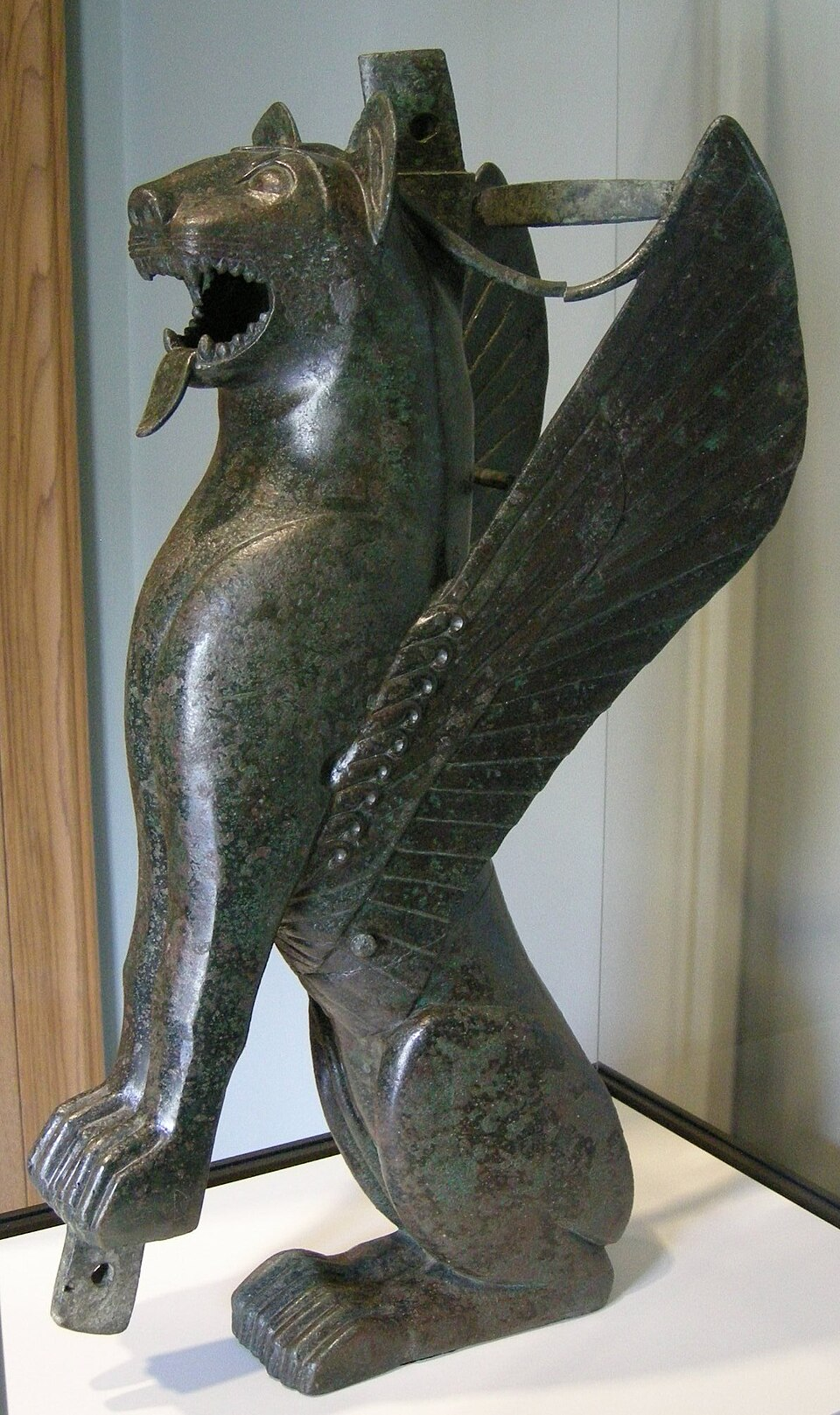
Tartessian Bronze Griffin, (Sailko/CC BY-SA 3.0)
What motivated the Tartessians to leave their community behind and vanish?
The disappearance of the Tartessians is a complex issue. Many researchers believe that civilization became unstable over time. Neighboring tribes may have taken over key mines or destroyed resources. Instability led to infighting and increased unrest in the community. Other scholars blame the rise of Carthage in the region. Since they were rivals of the Phocaeans, the Carthaginians could have also threatened the Tartessians. As pressures from rival civilizations grew, so did economic pressures. The Tartessians depended on Phoenician trade. When Phoenician trade waned, the Tartessian economy declined, and its wealth was reduced. Without Phoenician military support, new arrivals in the region may have invaded their territory.
Recent research in climatology indicates a pattern of tsunamis and floods during the 6th century. Repeated destruction of trading vessels or crops and livestock could have prompted the people to move inland and intermarry with other societies. Since the area is prone to earthquakes, these natural disasters may also have contributed to the disappearance. Storytellers enjoy relating Tartessos to Plato’s description of Atlantis. He says that Atlantis lay beyond the Pillars of Hercules and was “swallowed by the sea in a single day.” There are similarities between the two. Both were wealthy societies, both were located near Gibraltar, the pillars of Hercules, and both disappeared suddenly.
- Origins of Gold Spill the Secret of a Lost Culture. Does the Treasure of El Carambolo Lead to Atlantis?
- The Legend of Atlantis: Between Ancient Ruins and a Philosopher’s Tale
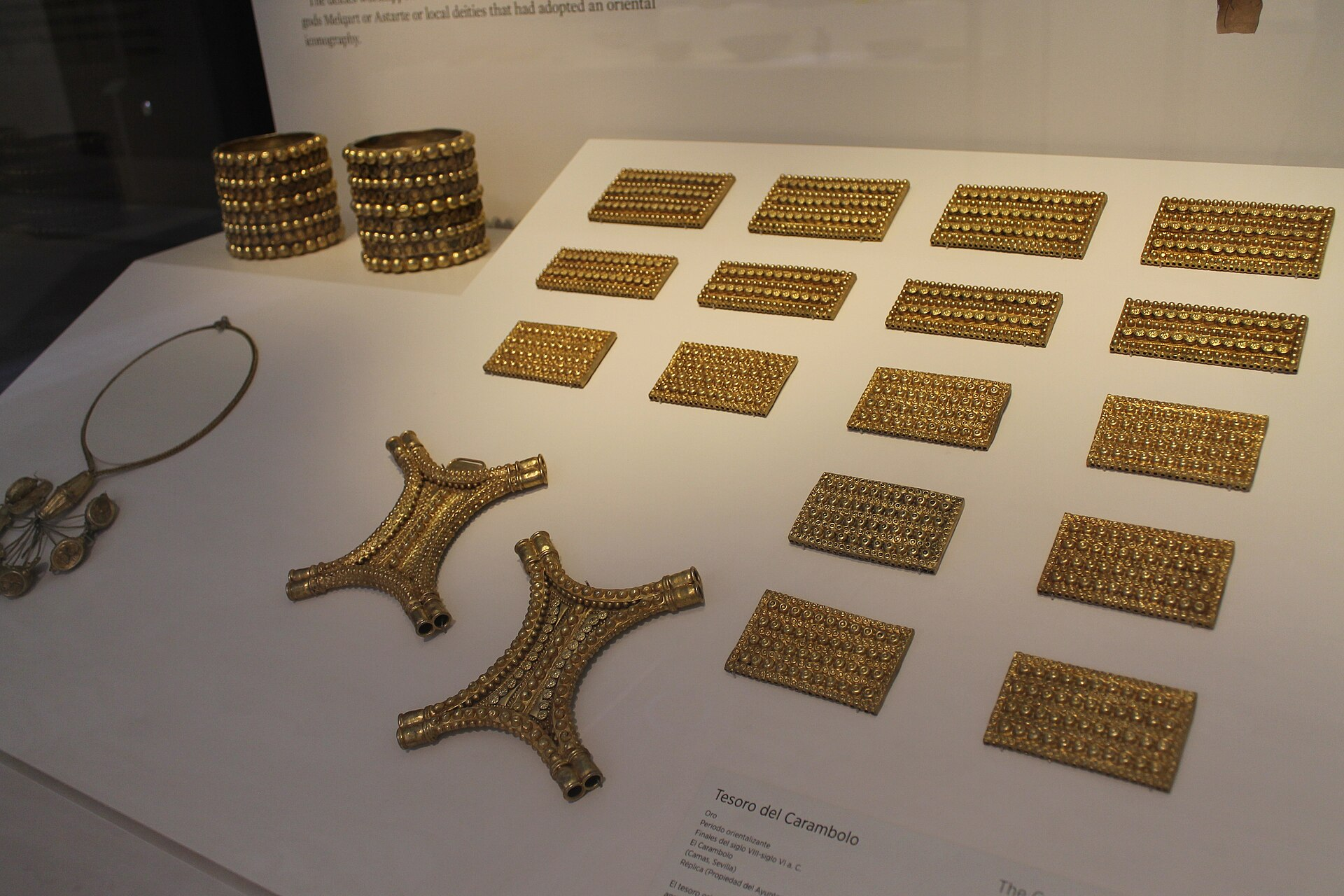
The Treasure of El Carambolo, (Viator Imperi/CC BY-SA 2.0)
What Recent Excavations Are Revealing About Tartessos
Archaeological excavations have increased the knowledge and the questions about Tartessos. For hundreds of years, Tartessos was little but a series of stories. The hypothetical site of the society’s location was covered by sediment and debris from coastal flooding. Research teams have uncovered inland sites that changed the perspective on Tartessos' location and organization. Cancho Roano is an island Tartessian sanctuary in Extremadura built and used by local Tartessian elites. Finally, Tartessian Warrior Stelae are engraved standing stones showing warriors with helmets and weapons.
Researchers are exploring newly found inland sites. One example is Casas del Turuñuelo, located in Extremadura. It was the site of a well-preserved Tartessian building with several floors. In 2023, an excavation at Casas del Turuñuelo exposed the “Lost Faces,” the first human sculptures of the Tartessian people. The 2,500-year-old stone relief busts show people decorated with jewelry. Third, the excavation provided evidence of ritual sacrifices on an enormous scale. Fifty-two animals were sacrificed, including 41 horses (equids), 6 cattle, 4 pigs, and 1 dog. Buildings were set on fire, and the entire site was buried under meters of earth. Ana Belén Gallardo Delgado, a historian and guide at La Mata, is optimistic about coming revelations:
"With the new technologies, I hope that much more can be clarified about the origin of this civilisation and delve a little more into its way of life. The Tartessian presence in the Extremadura area is becoming more and more important thanks to advances in archaeology. Also, it is believed that another eight burial mounds found in the Badajoz area could be Tartessian buildings like those already excavated."
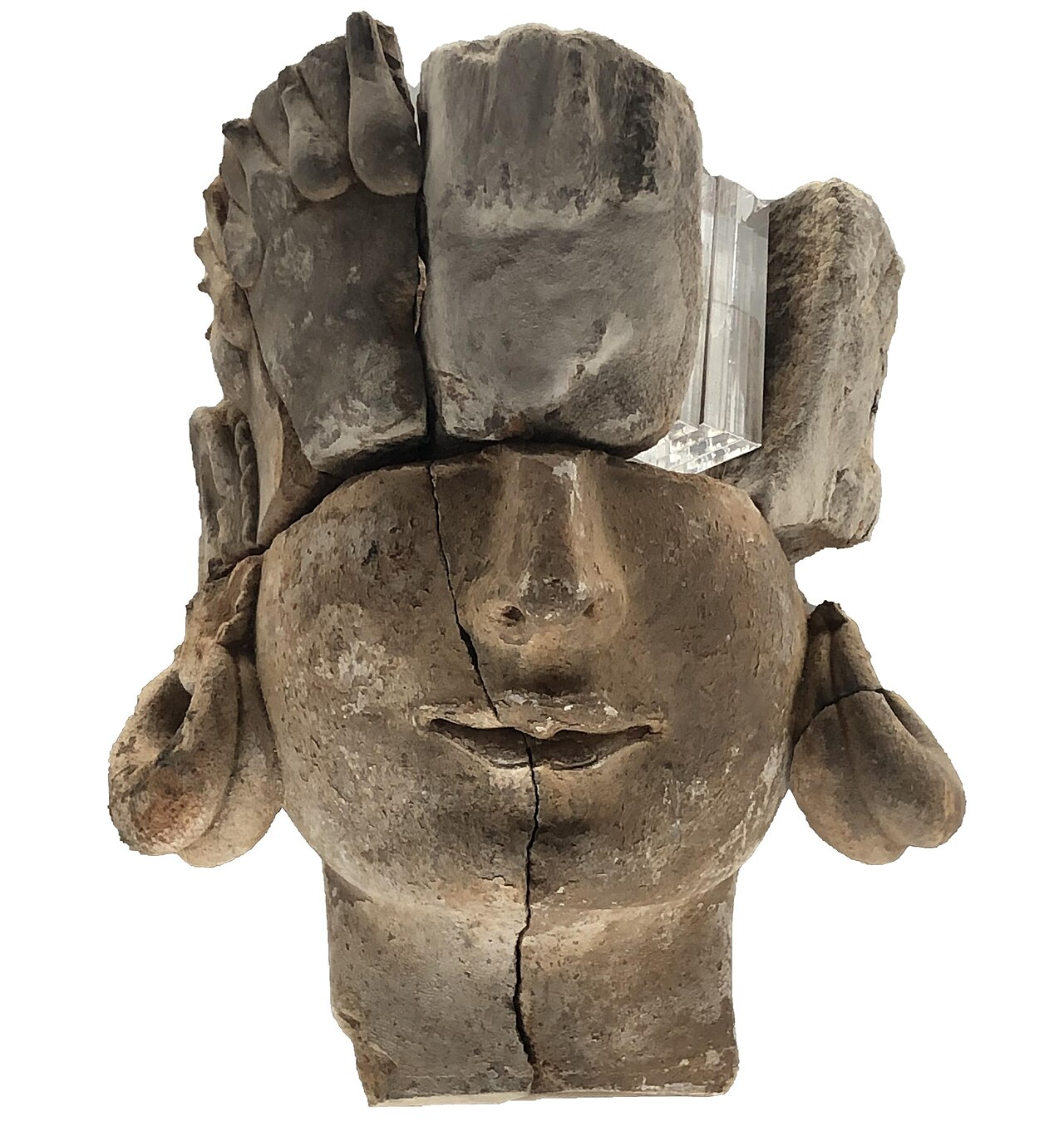
Tartessian Stone Sculpture, (Gianni86/CC BY-SA 4.0)
Sebastián Celestino Pérez, director of excavations for over a decade, is now a scientific investigator at the Institute of Archaeology in Mérida. He believes that Tartessos challenges the old idea that the East was ahead of Western Europe in development:
“Tartessos shows that urbanization, writing, and international trade emerged much earlier in Spain than once thought. Unfortunately, civilization can disappear without a trace. The story can lie buried under centuries of earth. This is the reason archaeologists must dig.”
Top Image: Map of the Tartessian Civilization 500 BC, Source: Lanoyta/CC BY-SA 4.0)
By Ramsey Hardin
References
Herodotus. The Histories. Vol. 1, Book 1.163. Translated by A. D. Godley. Cambridge, MA: Harvard University Press, 1920.
“The Lost Civilization of Tartessos.” The Forgotten Civilization of Tartessos: Europe’s Ancient Atlantis, August 28, 2025. https://www.thearchaeologist.org/blog/the-lost-civilization-of-tartessos.
Lofthouse, Andrew. “The Iberian Civilisation That Vanished.” The Iberian Civilization That Vanished, July 28, 2022. https://www.bbc.com/travel/article/20220727-the-iberian-civilisation-that-vanished.
Mastbaum, Blair. “The Ancient People Who Burned Their Culture to the Ground - Atlas Obscura.” The Ancient People Who Burned Their Culture to the Ground, 2021. https://www.atlasobscura.com/articles/tartessos-casas-del-turunuelo.