
Centuries before ancient Athens became a center for philosophy and democracy, slaves were mining precious metals in the rugged hills of Laurion, on the southeastern tip of the Attic Peninsula. Thousands of miners extracted silver. Laurion silver transformed a modest Greek polis into a Mediterranean economic power. This wealth funded the Athenian navy, expanded trade networks, and filled the treasury. From the busy agora to distant ports across the Aegean, Athenian silver influenced rulers and connected merchants with ordinary citizens. Though Athens is known for art and architecture, silver was the precious resource that helped build an empire.
Laurion: The Silver Heart of Athens
According to ancient historians, the mines of Laurion have been a source of silver, copper, and lead since the Bronze Age. The Greek historian, Xenophon, notes:
“It is clear, I presume, to every one that these mines have for a very long time been in active operation; at any rate no one will venture to fix the date at which they first began to be worked.”
The earliest artifacts are dated to 3200 BC. Coinage emerged in Athens during the late sixth century BC, possibly during or shortly after the Peisistratid period.
Peisistratos, a populist politician who seized power in Athens, redistributed wealth. He also likely benefited from revenues generated by Attica's mining districts, which helped support public works, religious festivals, and political consolidation. The people of Athens began to understand the power of silver to establish cultural programs and made loans to farmers to encourage agriculture. Under his reign, Athens began to mint its first silver coins, which increased exports of oil and wine. In 300 years of active mining, scholars estimate Laurion may have produced almost 3,000 metric tons of pure silver over its long history. No other city in Greece controlled such a rich mining district.
- Silver Mines Within an Ancient Town Shed New Light on the Rich History of Greece
- Scientists Track Silver Trade From Trojan War to Roman Republic
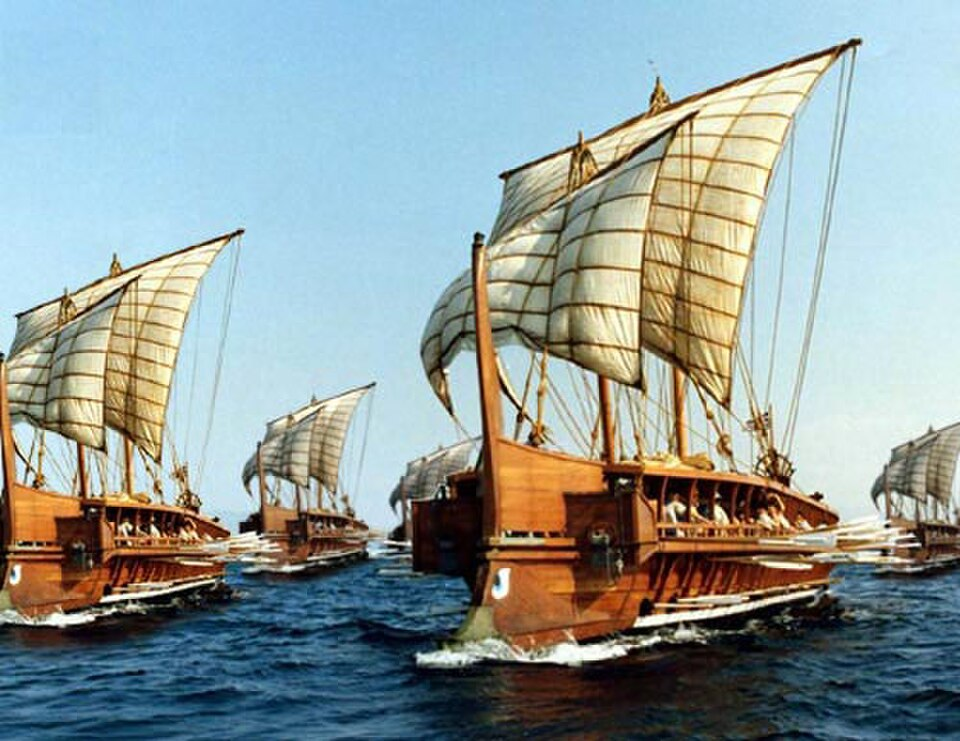
Reconstruction/illustration of ancient Greek triremes, likely depicting a Classical Greek naval fleet. (Tungsten/Public domain)
Silver Built Ships, Established Temples, and Created an Empire
The silver wealth transformed Athenian military power. In the 5th century BC, miners discovered a new vein of silver at the same time that tension with the Persian Empire escalated toward war. Themistocles, a persuasive Greek leader, realized that the newfound wealth could finance a fleet of triremes, sturdy warships, for the Athenian navy. Rather than distributing the profits of the silver mines among the people, Themistocles convinced the Athenian assembly to invest in warships. Herodotus, a historian, described his admiration for Themistocles’ planning:
“Themistocles persuaded them to forbear the distribution, and build with the money two hundred ships, to help them in their war against the Eginetans. It was the breaking out of the Eginetan war which was at this time the saving of Greece; for hereby were the Athenians forced to become a maritime power.”
They resolved then, when they took counsel after the oracle was given, to receive the Barbarian invading Hellas with their ships in full force, following the commands of the god, in combination with those of the Hellenes who were willing to join them.
In 480 BC, the Persians, under the command of Xerxes, began a massive invasion. Athens was prepared to meet the Persian challenge due to the construction of 200 triremes manned with well-trained rowers. Themistocles directed Greek ships in the decisive Battle of Salamis, in which the Greek navy repelled the Persian invasion. The victory assured Greek independence and elevated Greece to a position of power in the Aegean. With the victory, the prophecy of the Delphic Oracle proved true: “Safe shall the wooden wall continue for thee and thy children.” Financed by Laurion silver, the fleet of triremes created a “wall of wood” to protect Athens and its allies. Around the Mediterranean, Athens established and supported the Delian League to unite Greek city-states.
- Lords of the Sea: The Epic Story of the Athenian Navy and the Birth of Democracy
- Pericles: The Charismatic and Powerful Politician of Ancient Greece
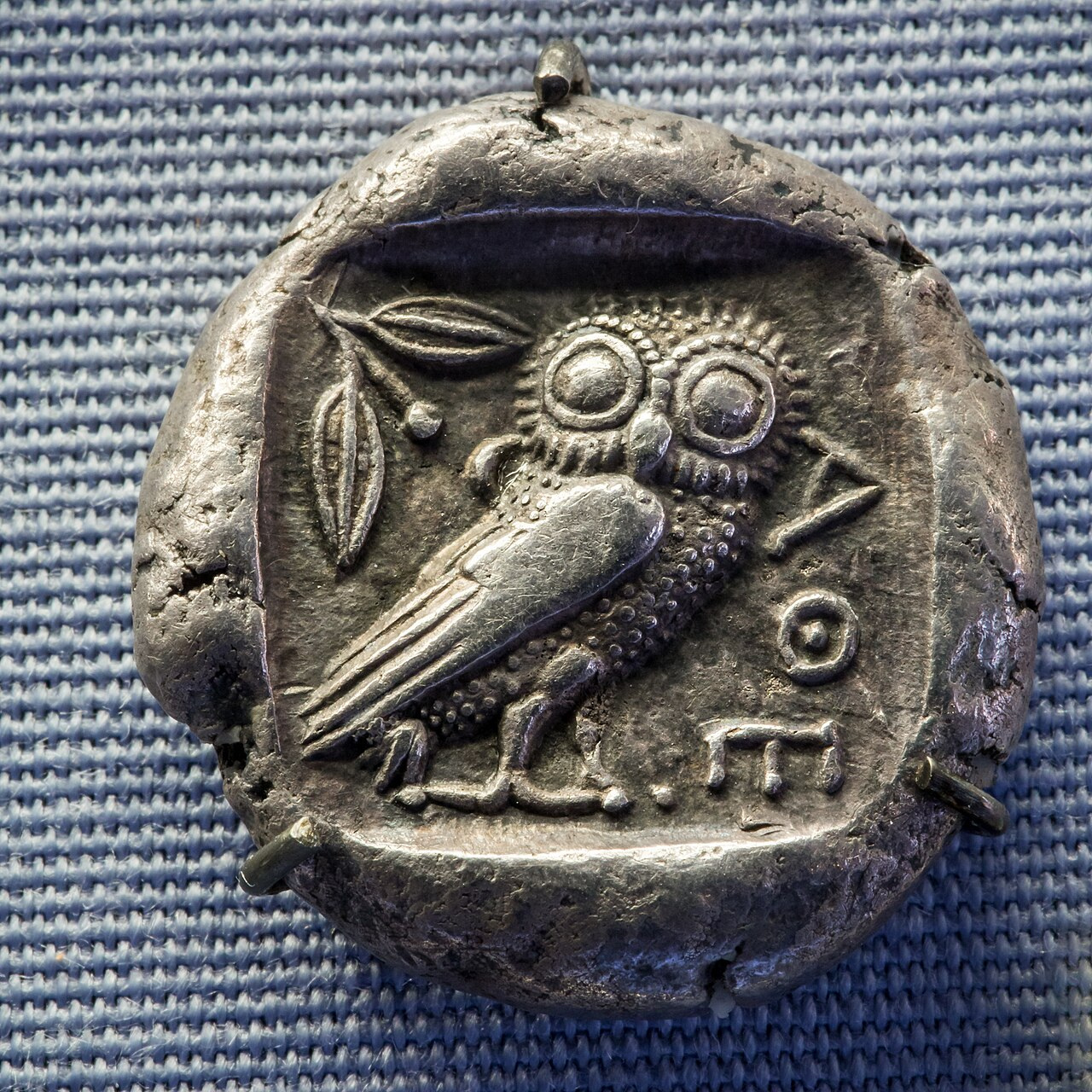
Silver coin of Classical Athens depicting the owl of Athena, symbol of wisdom and civic identity. (ArchaiOptix/CC BY-SA 4.0)
Silver did more than help Athens with warfare. It built the temples and public buildings that symbolize Athens’ Golden Age, such as the Parthenon. Towering on the top of the Acropolis, the Parthenon honors the goddess Athena. As Athens’ economic power increased, leaders supported democratic participation. The government paid citizens for public service, so that the poorest people could take part in governing their city. Silver coins, such as the drachma, became the standard currency for trade in the Greek world. The Athenian Owl Tetradrachm became one of the most widely accepted international trade coins of the ancient Mediterranean.
These heavy silver coins were first minted around 510 to 480 BC. The coins featured Athena on the obverse and an owl on the reverse, imagery that became famous throughout the Mediterranean. These coins display the helmeted head of Athena, goddess of wisdom and warfare, on the front and an owl, an olive twig, and the letters AOE on the back. The owl is a symbol of the Athenian Greek city-state. AOE is an abbreviation for “the Athenians.” The coins were widely used in trade, military payments, and tribute collections throughout the Athenian sphere of influence.
Silver and the Golden Age of Athens
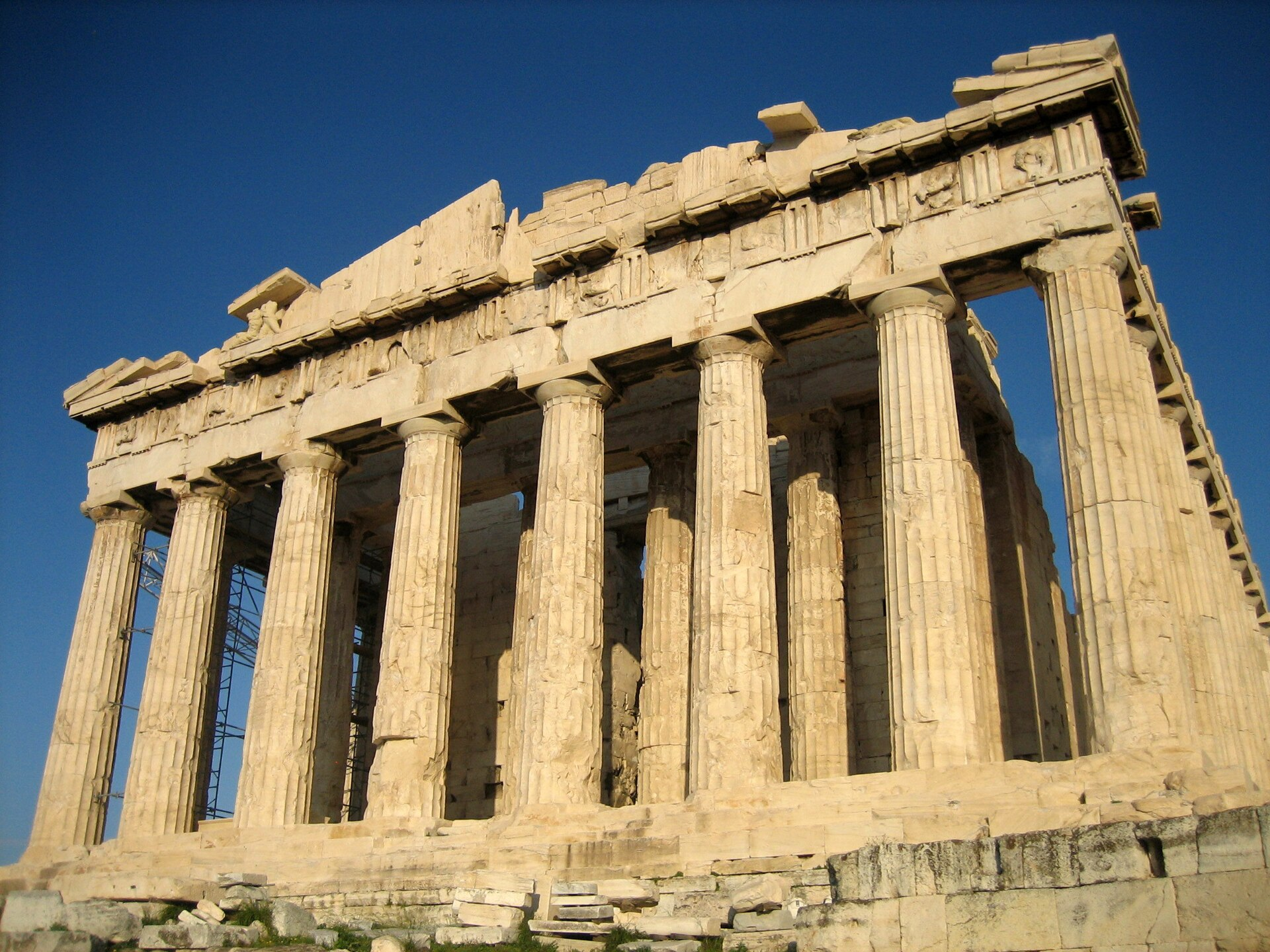
The Parthenon on the Acropolis of Athens, constructed between 447 and 432 BC during the Golden Age of Athens. (Mountain/Public Domain)
The revenue from silver greatly aided in bringing forth the Golden Age of Athens, a period of peace, wealth, philosophy, and art, dated from the Persian Wars through the end of the Peloponnesian War (c.480 BC-404 BC). At this silver-rich time, audiences watched the plays of Euripides and Sophocles. Athenians witnessed the teachings of Socrates and later the philosophical traditions developed by Plato and Aristotle. They also learned about the heroism of the Spartans who stood at the Thermopylae Pass from historians such as Herodotus, who later preserved accounts of Thermopylae and other Persian War battles. Modern countries strive for a stable currency in the Greek model. The silver drachma, with Athena and her owl, spread around the Mediterranean and influenced Roman coinage. Silver sustained Athens as its culture, power, and influence spread around the ancient world. The Athenian drachma was the currency that financed an era of unparalleled cultural and intellectual achievement. Later, Rome created a standard silver coin, the denarius, that supported its expansion in the ancient world.
Athens Declines with the Depletion of the Laurion Mine
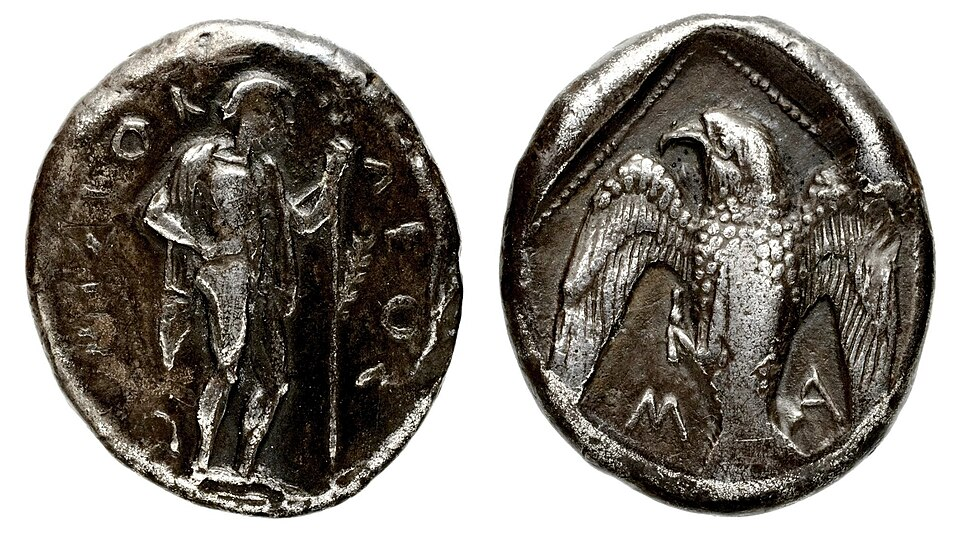
Coinage of Themistocles Magnesia. (Bibliothèque nationale de France/Public Domain)
Though the Persians were defeated, the wars in Greece continued. The city-states of Sparta and Athens struggled for power. The Laurion mines operated for centuries, but their productivity was inconsistent, falling when a vein was exhausted or rising with discoveries. By the Hellenistic and Roman periods, their output had declined, but their impact on Athenian history was lasting. Declining mining revenues contributed to Athens' difficulties, but military defeats and political changes played a far greater role in its loss of power. In 371 BC, Thebes, a city-state in central Greece, defeated Sparta.
A new power north of Greece, Macedonia, rose to prominence. The new king of Macedonia, Alexander the Great, conquered the Persian Empire between 334 and 330 BC, creating one of the largest empires of the ancient world before he died in 323 BC. Once again, silver boosted a new empire to dominance. The Roman Empire, bolstered by silver deposits in Italy and Spain, expanded across the Mediterranean world. Rome eventually came to incorporate several elements of Greek culture and governance while developing its own administrative institutions across the Mediterranean.
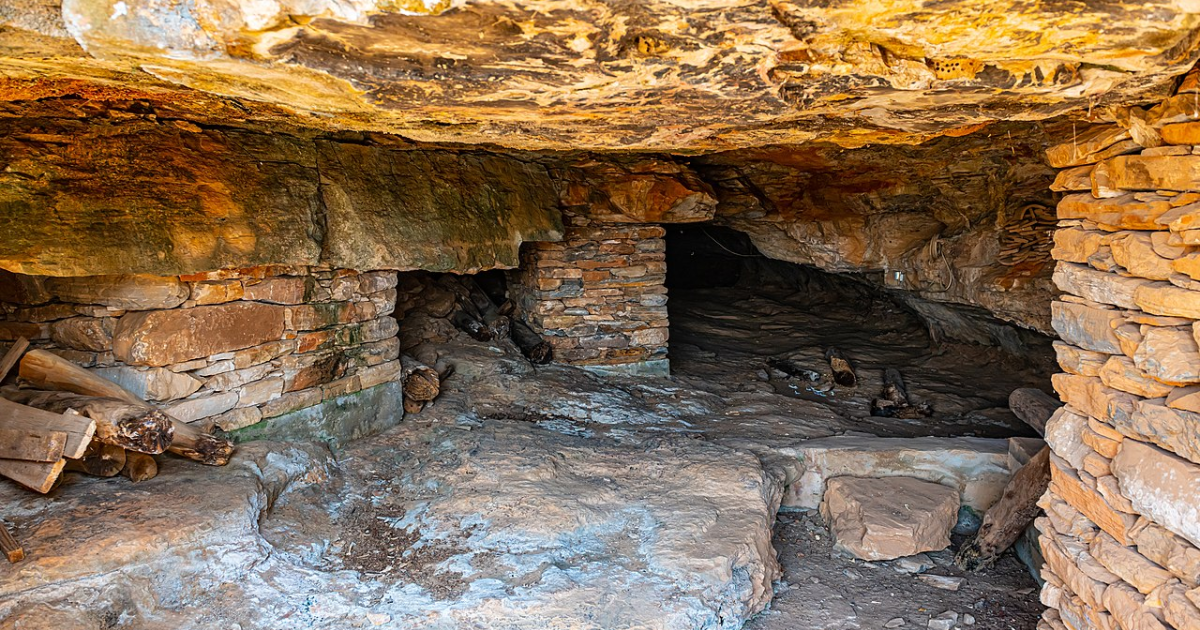
Top image: Ancient Mine Gallery at Laurium near the Thorikos theatre. Source: [Lavrio - ancient mine gallery Source: Rab Lawrence/CC BY 2.0
By Ramsey Hardin
References
APMEX. 2022. Greek Athenian Owl: The First International Trade Coin - APMEX. Knowledge Center. Available at:https://learn.apmex.com/learning-guide/coin-collecting/greek-athenian-owl-silver-tetradrachm/
Bressan, D. 2018. How The Mines Of Laurion Saved Ancient Greece And Made Western Civilization Possible. Forbes. Available at:https://www.forbes.com/sites/davidbressan/2018/12/17/how-the-mines-of-laurion-saved-greece-and-by-extension-made-western-civilization-possible/
Herodotus. 2010. The History of Herodotus, vol 1. Translated by G. C. Macauley. Oxford, United Kingdom: Oxford University Press. Available at:www.gutenberg.org
Kokkinidis, T. 2023. Silver in Ancient Greece Unlocked Trade and Built Democracy. The Greek Reporter. Available at:https://greekreporter.com/2023/11/09/silver-ancient-greece-trade-democracy/
Xenophon. 2020. On Revenues. Translated by H. G. Dakyns. Oxford, United Kingdom: Oxford University Press. Available at:www.gutenberg.org